
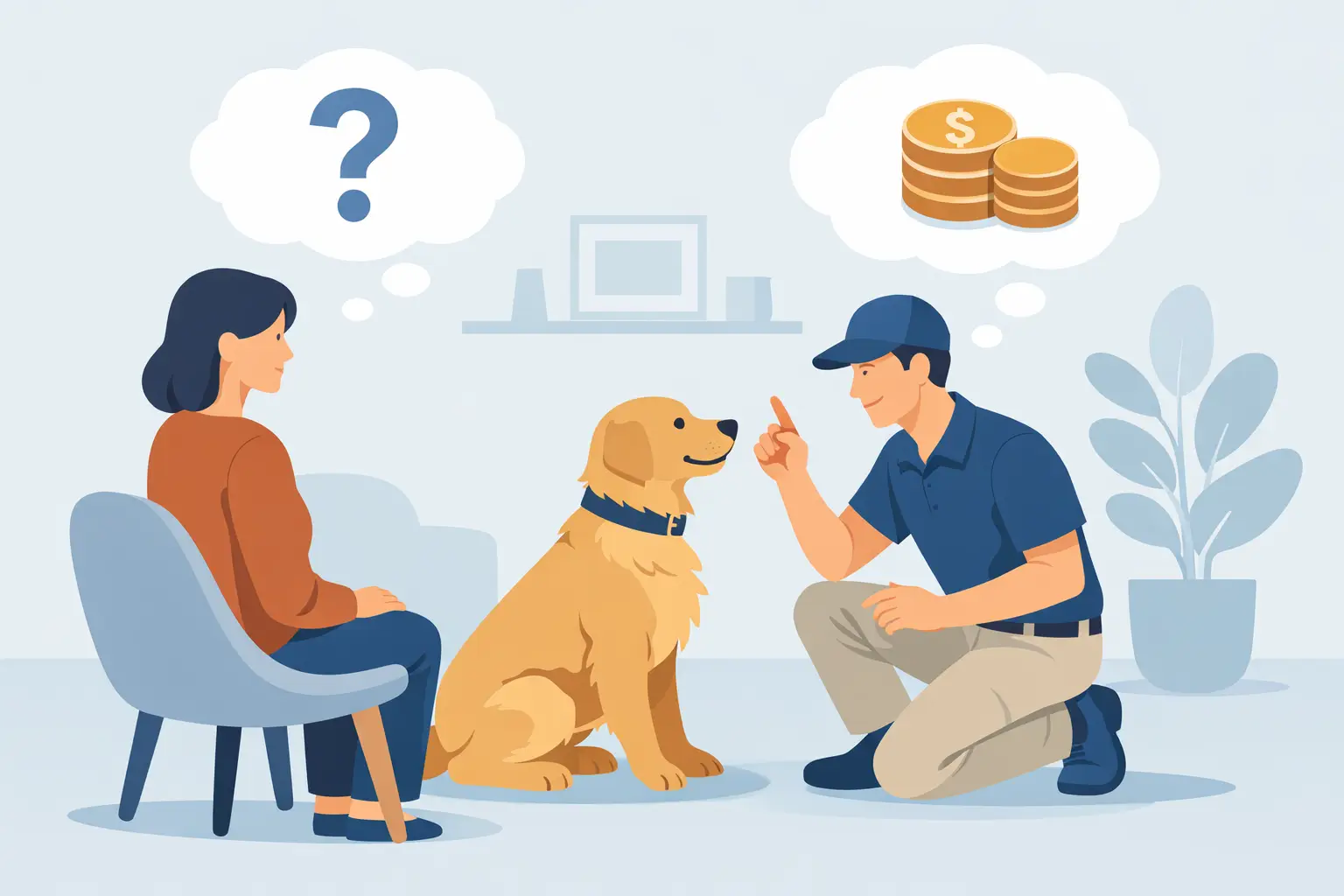
Your dog listens perfectly in the kitchen, then ignores you on the sidewalk. He sits for treats, but jumps on guests. She does great for one day, then has an accident the next. That gap between what your dog can do and what your dog does in real life is exactly where private dog training lessons make a difference.
For many owners, the issue is not effort. It is lack of a clear system. Group classes can be helpful, and online advice has its place, but neither can fully account for your dog’s temperament, your schedule, your home setup, and the specific habits that are causing stress. Private dog training lessons give you direct coaching, a training plan built around your dog, and practical progress you can use every day.
What private dog training lessons actually do
Private lessons are not just one-on-one versions of a basic class. Done well, they are targeted problem-solving sessions with a professional who can see what is happening in real time and adjust quickly. That matters when you are dealing with puppy mouthing, leash pulling, poor recall, housebreaking setbacks, door rushing, barking, or general disobedience.
A trainer working privately can evaluate how your dog responds, how you deliver commands, where timing breaks down, and what environmental triggers are getting in the way. Small details matter in dog training. The way you reward, the way you correct, and the consistency of your routine all affect the outcome.
That is why owners often feel relief after the first lesson. The situation starts to look less random. You can finally see what your dog is learning, what your dog is avoiding, and what needs to change for training to stick.
Why private dog training lessons often get faster results
Dogs do not live in classrooms. They live in apartments, busy homes, neighborhoods with distractions, and family routines that are not always predictable. Private training works well because it meets the dog in that reality.
If your dog loses focus when the front door opens, the trainer can work on that exact scenario. If your puppy is having accidents because the timing of potty trips is off, the lesson can focus on management, structure, and reward timing. If your rescue dog shuts down around strangers, the trainer can build confidence without overwhelming the dog.
This level of customization usually creates faster progress because you are not spending time on exercises your dog already knows or on problems that do not apply to your home. You are working on the behaviors that matter most right now.
There is also accountability. In private training, the owner gets coached as much as the dog. That is a good thing. Most long-term improvements happen when the human learns how to lead clearly and consistently. A proven trainer can spot mixed signals fast and replace them with simple, repeatable handling.
When private lessons make the most sense
Private lessons are especially useful when the problem is affecting daily life. Maybe your dog drags you down the block. Maybe guests cannot come over without chaos. Maybe your new puppy is smart but scattered, and you want a strong foundation before bad habits take hold.
They also make sense for busy professionals and families who need efficiency. If your schedule is tight, every training session needs to count. A private format cuts out the waiting, general instruction, and distraction that can slow progress in a group setting.
Some dogs simply do better in one-on-one training. Nervous dogs, highly excitable dogs, newly adopted dogs, and dogs with home-specific behavior issues often learn more effectively in a controlled private setting. That does not mean group classes are bad. It means the right format depends on the dog and the goal.
What to expect from a strong private training program
A quality trainer should not leave you guessing. You should come away with a clear picture of what you are working on, why it matters, and what to practice between lessons.
Most private programs start with an assessment. That includes your dog’s age, history, temperament, routines, current obedience level, and the specific issues you want to fix. From there, the trainer should create a plan that prioritizes the most important behaviors first.
For many dogs, that starts with practical obedience. Sit, down, place, heel, come, and reliable leash manners are not just nice commands. They are tools that make home life calmer and safer. Once those basics are in place, it becomes much easier to address jumping, barking, impulse control, and household rules.
A strong trainer will also explain what happens between lessons. Progress does not come from one hour a week alone. It comes from daily repetition with correct timing and follow-through. The good news is that training does not have to consume your day. Short, focused practice built into normal routines is often the most effective approach.
The biggest advantage is real-world coaching
This is where private lessons stand apart. Training is not really about getting a dog to perform for a treat in a quiet room. It is about getting reliable behavior when life is happening.
Real-world coaching helps owners learn how to handle distractions, enforce boundaries, and keep commands consistent in the moments that matter. That might mean practicing calm greetings at the front door, walking politely past other dogs, settling on a bed during dinner, or responding to recall at the park.
These are not abstract goals. They are quality-of-life improvements. A dog that can settle, listen, and respond reliably reduces stress across the board. A trained dog is a happy dog, and just as important, a trained dog is much easier to live with.
Private lessons are not magic, and that matters
It is worth being honest about the trade-off. Private dog training lessons can speed up progress, but they do not replace owner consistency. If the dog gets one set of rules during the lesson and another set the rest of the week, results will stall.
Training also depends on the dog in front of you. A young puppy with no history of bad habits may improve quickly. A dog with months of rehearsal in pulling, barking, or ignoring commands may need more time. Fear-based issues, reactivity, and long-standing behavior patterns often require a more careful pace.
That is not a reason to delay training. It is the opposite. The earlier you address a problem, the easier it usually is to change. Good training is proactive as much as corrective.
How to know if a trainer is the right fit
Look for clarity, experience, and a system that makes sense. The trainer should be able to explain how they teach, what they expect from owners, and how they adapt to different dogs. Positive reinforcement and motivation-based methods matter, but so does structure. Most owners need both encouragement and clear standards if they want dependable obedience.
You also want someone who understands practical outcomes, not just theory. The goal is not to impress you with jargon. The goal is to help your dog behave better at home, on walks, around guests, and in daily life.
That is why many Los Angeles dog owners prefer a training approach that is direct and results-driven. In a busy environment, obedience has to hold up around noise, traffic, visitors, and distractions. A trainer who has worked with thousands of dogs can usually recognize patterns quickly and build a plan that fits the owner’s lifestyle instead of fighting against it.
Smart Dogs has built its reputation around that kind of practical training – clear communication, proven results, and behavior that works in the real world.
Are private dog training lessons worth the cost?
For the right owner, yes. If your dog’s behavior is creating daily frustration, damaging your confidence, or limiting your freedom, private training is often one of the most efficient ways to solve the problem. It can save time, reduce stress, and prevent small issues from becoming entrenched habits.
The value is not just in teaching commands. It is in creating a dog that fits more smoothly into your life. That might mean a puppy that housebreaks faster, an adolescent dog that stops dragging you on walks, or a rescue dog that learns how to settle and trust your direction.
When training is specific, consistent, and guided by experience, progress becomes much more predictable. And once you have a dog that understands expectations and responds reliably, everyday life gets a lot easier.
If your dog has potential but your current approach feels inconsistent, private training can provide the structure you have been missing. The right lesson at the right time does more than fix one behavior. It changes the relationship by giving both you and your dog a clearer path forward.
