
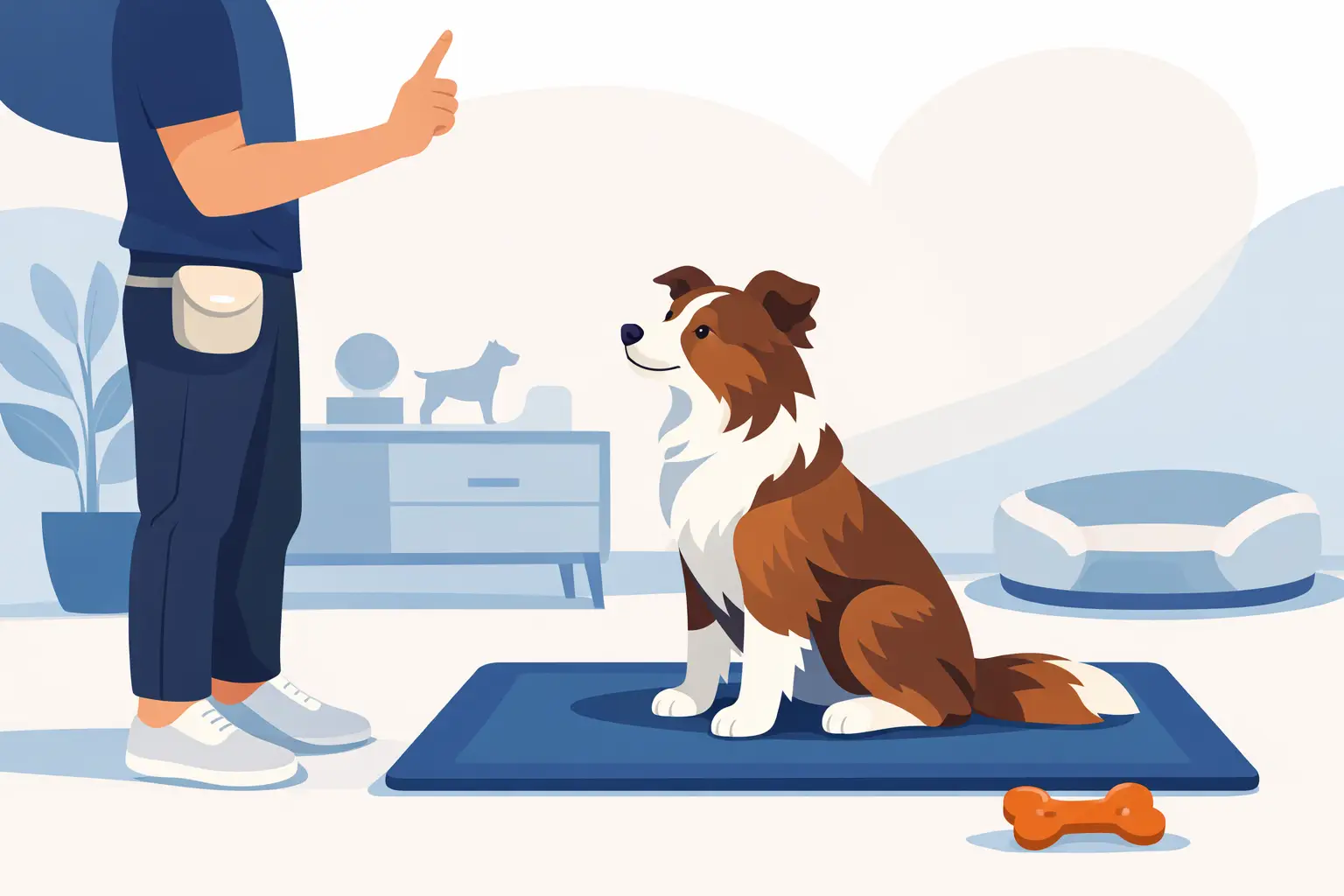
The moment your dog launches at the front door, crowds the kitchen, or paces while guests are trying to sit down, you need a command that creates instant structure. That is exactly why so many owners want to teach dog place command early. Done correctly, place is not a trick. It is a practical skill that helps your dog settle, wait, and stay out of the way without constant correction.
For busy households, this command pays off fast. It gives your dog a clear job instead of leaving them to guess what “calm down” means. A trained dog is a happy dog, and a dog who understands place usually becomes easier to live with in all the everyday moments that matter.
What the place command really means
Place means your dog goes to a specific bed, mat, platform, or cot and remains there until released. The location matters. Your dog is not just being told to lie down somewhere in the room. They are learning to go to one defined spot and stay committed to it.
That distinction is what makes place so useful. In real life, you need more than a basic down. You need a command that works while you answer the door, carry in groceries, cook dinner, or manage a child’s bedtime routine. Place gives your dog a job with boundaries.
For most families, the best place target is something portable, like a raised cot or dog bed. A portable target helps your dog understand the concept in more than one room. Later, you can bring that same skill to patios, parks, training classes, and friend visits.
Why place works so well in everyday life
Dogs do better when expectations are clear. A lot of problem behavior at home comes from overexcitement, lack of direction, or inconsistent boundaries. Place addresses all three.
It helps with door manners because your dog has a defined position away from the entry. It helps with counter surfing because your dog cannot be under your feet and on a mat at the same time. It helps with guest behavior because instead of jumping or barking for attention, your dog learns that calm behavior earns reward.
Place can also lower stress for nervous or high-energy dogs. Many dogs relax when they understand exactly where they belong. That does not mean place fixes every behavior issue by itself. If your dog has serious anxiety, reactivity, or aggression, training needs a fuller plan. But for general household control, place is one of the most valuable commands you can teach.
How to teach dog place command step by step
Start in a quiet room with minimal distractions. Put the bed or mat on the floor and have small, easy-to-deliver rewards ready. Keep your leash on if your dog tends to wander, but stay relaxed. You are building clarity, not pressure.
Step 1: Introduce the target
Begin by rewarding any interest in the bed or mat. If your dog looks at it, steps toward it, or touches it, mark that moment with praise or a clear verbal marker and reward. Some dogs offer this quickly. Others need you to guide them with a treat lure.
If you use a lure, move the treat slowly so your dog steps onto the place target. The instant all four paws are on, reward. At this stage, do not worry about duration. You are teaching the idea that getting onto that object pays off.
Repeat several short reps until your dog starts moving to the bed with less help.
Step 2: Add the verbal cue
Once your dog is predictably stepping onto the target, say “place” right before they move onto it. Then reward on the bed. Timing matters here. Say the cue once, then help your dog succeed if needed. Avoid repeating the word over and over.
A common mistake is adding the cue too early, before the dog understands the action. If that happens, the word becomes background noise. Wait until your dog is already starting to connect the movement with the reward.
Step 3: Build duration on the place
After your dog will go to place, begin rewarding them for staying there. Start small. One second, then three, then five. If your dog stands up, calmly reset and make the next repetition easier.
This is where many owners rush. They ask for too much time too soon, the dog breaks position, and frustration starts on both sides. A better approach is to reward often while your dog is still successful. You are teaching that staying put is part of the exercise.
If your final goal is a down on place, reward for lying down after they arrive. Many dogs naturally settle once they realize calm behavior keeps the rewards coming.
Step 4: Add a release word
Your dog also needs to know when the exercise is over. Use a clear release such as “free” or “okay,” then encourage them off the bed. This matters because without a release, many dogs start guessing when they can leave.
A solid place command has two parts: go there and stay there until released. Both parts need practice.
Teach dog place command with distance and distractions
Once your dog can go to place and remain there for short periods, start making it more realistic. Take one step away, then return and reward. Then take two steps. Then walk around the room. Then sit in a chair for a few seconds.
Add distractions gradually. Open a cabinet. Knock lightly on a wall. Have a family member walk through the room. If your dog breaks, the distraction was too difficult or your duration was too long. That is not failure. It is information. Adjust and set up a win on the next repetition.
This is where proven results come from. Reliable behavior is built by increasing challenge in small, controlled layers. If you jump from a quiet room straight to guests at the front door, most dogs will not be ready.
Common problems when teaching place
Some dogs pop off the bed repeatedly. Usually that means duration was raised too fast, rewards are too infrequent, or the dog does not fully understand the boundary yet. Go back to short, successful reps and reward more often.
Some dogs only perform if you are standing right next to the mat. That means you need more distance work. Step away for one second, return, and reward before the dog gets up. Build from there.
Some dogs creep to the edge or hang half on and half off. In that case, use a clearer target. A raised cot often helps because the physical edge is obvious. A fluffy blanket on the floor can be harder for some dogs to understand.
If your dog resists going to place, check your setup. Are you training when they are overexcited, overtired, or distracted by too much activity? Are your rewards worth working for? Good training is not just about repetition. It is also about timing, environment, and motivation.
Where owners use place most successfully
Place becomes valuable when it is practiced in the moments that normally feel chaotic. Before opening the door, send your dog to place. Before setting dinner on the table, use place. During family movie time, use place. If your dog learns that this command shows up in real routines, it starts becoming automatic.
For puppy owners, place can be a major help with impulse control. For rescue owners, it can create predictability and reduce confusion in a new home. For families with children, it provides a safe, clear station where the dog can settle instead of weaving through high-energy activity.
There is a trade-off, though. Place should not become a parking spot for every problem all day long. Dogs still need exercise, engagement, and appropriate freedom. Place works best as part of a balanced routine, not as a substitute for meeting your dog’s physical and mental needs.
How long it takes to get a reliable place command
It depends on the dog, the consistency of practice, and the skill of the handler. Some dogs understand the basic concept in one or two sessions. Reliability around distractions takes longer.
Most owners see meaningful progress when they practice for a few minutes at a time, several times a day. Short sessions usually beat long ones. Dogs learn better when training stays clear and upbeat instead of dragging on until everyone is tired.
If your dog struggles with overexcitement, poor impulse control, or a history of ignoring commands, do not assume the place command is failing. More often, the dog needs better structure, cleaner timing, and a more systematic progression. That is where experienced coaching can make a big difference.
A place command is simple on paper, but powerful in practice. When your dog can go to a defined spot, stay there calmly, and wait for release, daily life gets easier very quickly. Start small, reward clearly, and build in layers. The goal is not perfection on day one. The goal is a dog who understands their job and can succeed with confidence, because that is what creates a calmer home for everyone.
