
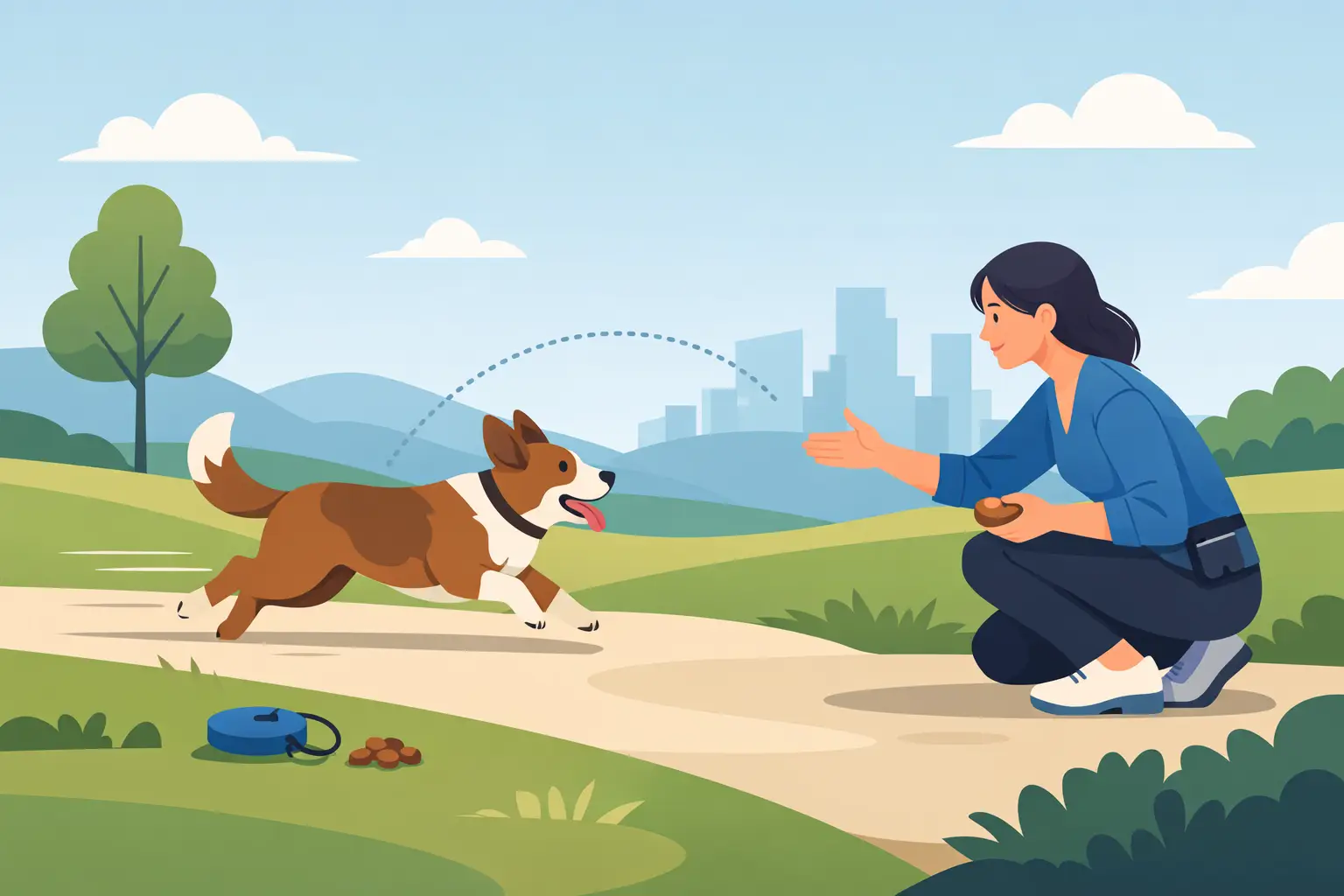
A dog that comes when called is not just easier to live with. It is safer, less stressful to manage, and far more enjoyable to include in everyday life. If you want to teach dog reliable recall, the goal is not getting one lucky response in the backyard. The goal is a dog that turns and commits to you even when the environment gets interesting.
That matters in real life. At the park, on a hike, leaving the front door, or moving through a busy Los Angeles neighborhood, recall is one of the commands that protects your dog and gives you control without constant tension. A trained dog is a happy dog, and a recall your dog truly understands creates freedom on both ends of the leash.
What reliable recall actually means
Reliable recall does not mean your dog comes back only when there is no distraction. It means your dog has learned that your cue matters every time, and that returning to you is consistently worth it. For some dogs, that develops quickly. For others, especially rescues, adolescents, or independent breeds, it takes more repetition and smarter progression.
This is where many owners get frustrated. They call the dog, the dog hesitates, sniffs, keeps moving, or starts a game of chase. The mistake is assuming the dog is being stubborn. More often, the dog simply has not been trained through enough levels of difficulty. Reliability is built in layers.
How to teach dog reliable recall from the ground up
Start in the easiest possible setting. That usually means inside your home with minimal distraction. Say your recall cue once in a clear, upbeat voice. When your dog comes to you, reward immediately. The reward should matter to your dog – food for many dogs, a toy for some, praise and touch for others, and often a combination.
At this stage, timing is everything. If your dog gets to you and you delay the reward, you weaken the lesson. You want your dog thinking, I heard the cue, I moved fast, and that paid off.
Keep the first sessions short. A few strong repetitions are better than drilling the command until your dog checks out. End while your dog is still engaged.
Pick one cue and protect it
Choose one recall cue and stay consistent. If you say come, use come. If you use here, use here. Problems start when owners rotate through come, come on, over here, hurry up, and the dog learns that none of it has a clear meaning.
Just as important, do not poison the cue. If you call your dog and then immediately do something unpleasant every time, like ending play, forcing a bath, or trimming nails, your dog starts weighing whether coming to you is a good deal. Sometimes call your dog, reward generously, and then release right back to what they were doing. That helps preserve speed and enthusiasm.
Build value before you add difficulty
A common training error is asking for recall in high distraction environments too early. Owners move from the kitchen to the dog park and wonder why the response falls apart. Your dog is not failing basic recall. Your dog is telling you the distraction level is higher than the training level.
First build strong success in easy places. Then move to the backyard, then a quiet sidewalk, then a larger open area on a long line. Add only one challenge at a time – more distance, more distraction, or more duration away from you. If you increase all three at once, reliability usually drops.
Why a long line changes everything
If you want dependable off-leash behavior later, train with a long line now. A long line gives your dog room to move while keeping you in control of the outcome. It prevents the dog from rehearsing ignoring you, which is one of the fastest ways to weaken recall.
With the long line attached, let your dog explore. Call once. If your dog turns and comes, reward well. If your dog hesitates, use gentle guidance on the line to help complete the behavior, then reward when they arrive. The line is not there for punishment. It is there to make the right choice easier and more consistent.
For busy owners, this approach saves time because it creates clear repetitions without chaos. You are not chasing your dog, repeating the cue five times, or hoping the environment will cooperate.
The rewards have to compete with the environment
Your dog is always making comparisons. If the smell in the grass, another dog, or a moving squirrel is more rewarding than you, recall will struggle. That does not mean your dog is untrainable. It means your reinforcement is too weak for the situation.
Use rewards your dog rarely gets at other times. Small, high-value food rewards often work well. For toy-driven dogs, a fast game can be even better. Praise is useful, but praise alone usually does not build strong recall in the early stages.
This is also where energy matters. Your recall cue should sound inviting, not flat or irritated. Dogs read tone quickly. If you sound tense, many dogs will slow down, avoid you, or respond with uncertainty.
Mistakes that weaken recall training
Owners often sabotage recall without meaning to. Repeating the cue is one of the biggest problems. If you say come, come, come, come, your dog may learn that the first cue is optional. Say it once, then help your dog succeed.
Another problem is only calling your dog when fun is about to end. If recall always means crate time, car ride, or going inside, motivation drops. Mix in recalls that end with reward and release.
Punishing the dog after they come is another major setback. If your dog takes too long but eventually gets to you, that is not the moment to scold. Dogs connect your reaction to arriving, not to the delay. If coming to you feels bad, speed will disappear.
It depends on the dog in front of you
Puppies often learn quickly but are inconsistent because their focus is immature. Adolescent dogs may seem like they forgot everything because distractions suddenly matter more. Rescue dogs may need time to trust, decompress, and understand the rules. High-drive dogs usually need stronger reinforcement and more structured practice, while softer dogs often need calm, encouraging handling.
This is why a proven system matters. Good training is not about pushing every dog through the same pace. It is about applying the right steps in the right order so the dog can succeed.
How to practice recall in real life
Reliable recall is built in short sessions woven into daily life. Call your dog across the room. Call your dog in the yard. Practice before meals, before walks, and during calm moments when success is likely. Then reward.
As your dog improves, work in more realistic settings. Use a fenced area first if possible. Add mild distractions before major ones. Practice around people at a distance before expecting recall near active play or other dogs.
Urban and suburban dogs especially need this progression. Sidewalk noise, scooters, delivery trucks, other dogs, and foot traffic all compete for attention. Training has to reflect the world your dog actually lives in.
When off-leash recall is not ready yet
Some owners rush to test recall off leash because the dog has done well a few times. That is where setbacks happen. Off-leash reliability should be earned through many successful repetitions on a long line in different places.
Even then, some environments may still be too difficult. That is not failure. That is judgment. A reliable recall includes knowing when your dog is trained for the situation and when management is still the smarter choice.
If your dog has a history of bolting, ignoring cues outdoors, or becoming fixated on distractions, getting professional help can speed up the process and prevent months of inconsistent practice. At Smart Dogs, we see this often. Owners are trying hard, but the sequence is off, the timing is late, or the dog has been given too much freedom too early.
Reliable recall is really about trust and repetition
Dogs come back fastest when the behavior is clear, heavily rewarded, and practiced enough that it becomes automatic. That is what makes recall dependable. Not luck, not volume, and not frustration.
If you stay consistent, protect the cue, and train in realistic stages, your dog can learn to respond with confidence. Start small, build carefully, and make coming to you one of the best decisions your dog gets to make all day.
