
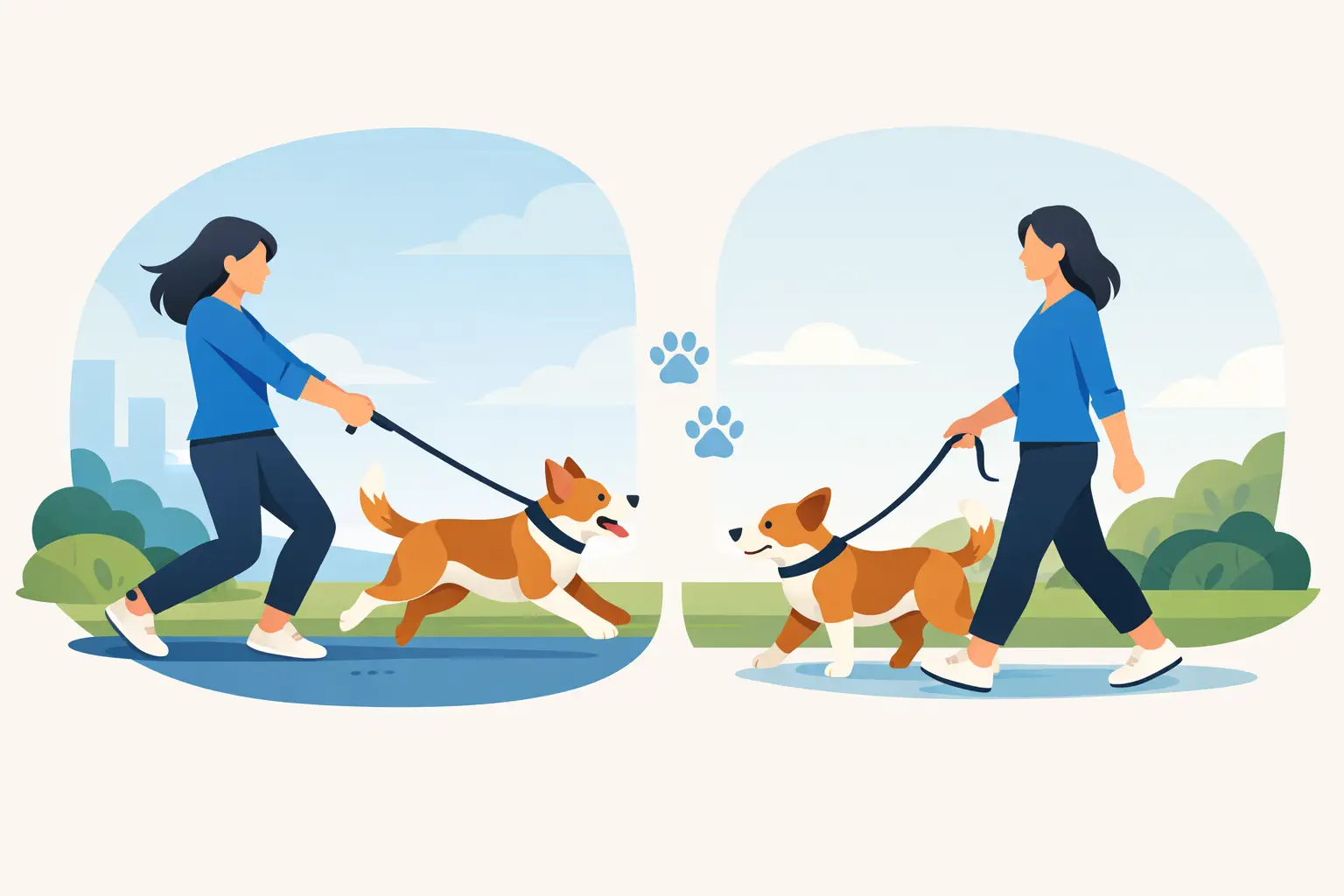
The walk usually starts fine – then your dog hits the end of the leash, leans into the collar, and suddenly you are being taken for a ride. Leash pulling dog training is not about overpowering your dog. It is about teaching a clear walking pattern, rewarding the right choices, and removing the payoff for dragging you down the street.
For busy owners, this matters fast. A dog that pulls on leash turns a simple walk into a daily frustration. It can strain your shoulder, spike your stress, and make exercise feel like work. More importantly, it teaches your dog that excitement and forward pressure are the way to move through the world. If you want calmer walks, better focus, and more control in real life, the training has to be practical and consistent.
Why dogs pull in the first place
Most dogs pull because it works. They move forward, reach the grass, greet the dog, sniff the tree, and keep going. From the dog’s point of view, pulling is effective behavior.
Excitement plays a role too. Puppies pull because everything is new. Adolescent dogs pull because impulse control is still weak. Rescue dogs often pull because they have never been shown another way to walk. Some dogs also pull harder when the environment is crowded or stimulating, which is common in Los Angeles neighborhoods where there is always movement, noise, and activity.
Breed tendencies matter, but they are not the whole story. A strong sporting dog or working breed may have more drive and stamina, but a small dog can be just as committed to towing its owner down the sidewalk. The real issue is not size. It is whether the dog has learned that a loose leash is the requirement for moving forward.
What leash pulling dog training should actually teach
Good leash work is not just “don’t pull.” That is too vague for most dogs. Training needs to teach a specific picture: stay near the handler, keep the leash loose, check in regularly, and match pace when direction changes.
That does not mean your dog must heel perfectly through an entire neighborhood walk. For most pet owners, that is not the goal. Real success is a dog that can walk politely, respond when asked, and recover quickly when distracted. There is a difference between formal competition-style heeling and functional daily walking. For family life, functional wins.
This is where many owners get stuck. They expect the dog to understand leash pressure, pacing, and position without ever teaching those skills in a calm setting. Then they test the behavior in a busy environment before the dog is ready. That is not a stubborn dog. That is a training gap.
Start with the right setup
Equipment will not train your dog for you, but the wrong setup can slow progress. A standard leash around 6 feet gives you control without creating constant tension. Avoid retractable leashes during training. They teach the dog that pressure on the leash is normal and often reward pulling with more distance.
For many dogs, a properly fitted front-clip harness or a training-safe walking tool can help reduce rehearsal of pulling while skills are being built. For others, especially dogs that become frustrated in certain gear, a flat collar may be fine if the dog is not choking and the handler has good timing. It depends on the dog, the handler, and the intensity of the pulling.
Treats matter more than many owners think. If your dog ignores the food, the environment is probably too hard or the reward is too weak. Use small, high-value rewards and be ready to pay often at the beginning. Early leash training should feel clear and worth it to the dog.
How to train a dog to stop pulling on leash
Begin in the easiest environment available. That might be your living room, driveway, hallway, or a quiet patch of sidewalk. If your dog can only focus for a few seconds, that is enough to start.
Mark and reward the behavior you want before the pulling begins. When your dog is beside you or chooses to check in, reward it. Then take a few steps and reward again while the leash is still loose. The biggest mistake owners make is waiting until the dog is already forging ahead, then trying to fix it in the moment. Better timing creates faster learning.
If the dog pulls, stop forward movement. Do not drag the dog back and do not keep walking while repeating cues the dog has learned to ignore. Stillness is information. The dog learns that tight leash equals no progress.
The second the dog softens the leash, turns back, or moves toward your side, mark that choice and move forward again. That return to motion is part of the reward. This is one of the core patterns in leash pulling dog training: loose leash earns movement, tension stops it.
Direction changes also help. If your dog starts loading forward, calmly turn and go the other way. Reward when the dog catches up and reconnects. This keeps the walk interactive and teaches the dog to pay attention instead of locking onto the environment.
Keep sessions short enough that both you and your dog can stay consistent. Ten focused minutes is often more productive than a long, frustrating walk full of pulling.
Common mistakes that slow progress
Owners are often more consistent with commands than consequences. They say “easy” or “heel” repeatedly, but the dog still gets to move forward while pulling. Dogs learn from outcomes, not speeches.
Another common problem is asking for too much too soon. If your dog can walk nicely in the yard but falls apart near traffic, kids, scooters, or other dogs, the answer is not harsher correction. It is better training progression. Move from low distraction to moderate distraction in steps.
There is also a stamina issue. Young dogs and high-energy dogs may understand the lesson but still struggle if they are over-aroused. In some cases, a short decompression break, more structured exercise, or practicing before peak excitement can improve results. Training and energy management work together.
Finally, inconsistency between family members can undo progress. If one person requires a loose leash and another lets the dog pull to every bush, the dog gets mixed information. Everyone walking the dog needs to use the same rules.
What to do when distractions take over
Real walks are messy. Another dog appears. A delivery truck rattles by. Your dog spots a squirrel and forgets you exist. This is where owners need a plan, not just hope.
Create distance early. If your dog is fixated, lunging, or accelerating, you are probably too close to the distraction for learning to happen. Move away until your dog can think again. Then reward eye contact, responsiveness, and a loose leash.
You can also use simple pattern work. A few steps, reward. Turn, reward. Pause, check in, reward. Predictable structure helps dogs settle when the environment gets noisy. It gives them a job they understand.
If your dog only pulls hard around specific triggers like other dogs or people, that is no longer just a leash manners issue. It may involve frustration, anxiety, or reactivity. The leash is where the problem shows up, but not necessarily where it starts. That kind of case needs a more targeted training plan.
How long does leash training take?
Owners always want a timeline, and that is fair. The honest answer is that it depends on the dog’s history, age, drive level, and how consistently the training is practiced.
Some dogs improve noticeably in the first week when the handler changes timing and stops rewarding pulling. Others need several weeks of repetition before calm walking becomes reliable in busy areas. Dogs with a long history of pulling, or dogs that become overstimulated outdoors, usually take longer.
The good news is that progress often comes in layers. First the pulling decreases. Then the dog checks in more. Then recovery after distractions gets faster. Reliable walking is built through repetition, not one perfect session.
When professional help makes sense
If walks feel like a daily battle, getting expert eyes on the problem can save time. A professional trainer can quickly spot whether the issue is timing, equipment, over-arousal, unclear expectations, or a deeper behavior pattern.
That matters for strong dogs, families with kids, older owners, and anyone whose dog is becoming unsafe to walk. A proven system brings structure to the process and prevents months of practicing the wrong thing. At Smart Dogs, that practical approach is the point – training should improve everyday life, not just look good in a lesson.
A trained dog is a happy dog, and a dog that can walk calmly beside you has more freedom, more access, and a better relationship with the people holding the leash. Start small, stay clear, and make every walk a lesson your dog can actually understand.
