
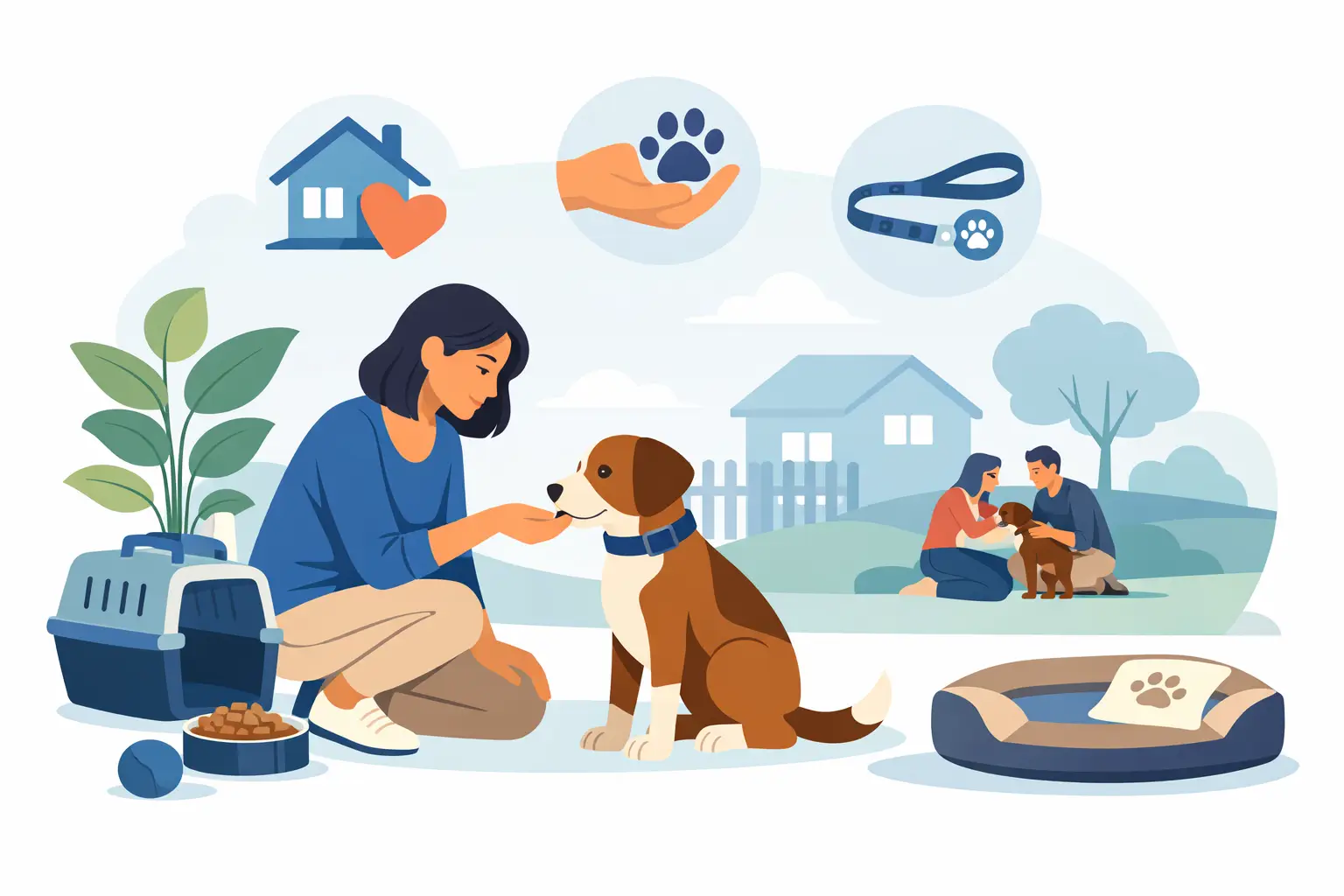
The first 72 hours with a rescue dog can feel unpredictable fast. One dog shuts down and sleeps under the table. Another paces, whines, and follows you into every room. A third seems perfect for two days, then starts chewing, barking, or having accidents. That is exactly why a new rescue dog adjustment guide matters. What you do early sets the tone for trust, structure, and behavior in the weeks ahead.
Most rescue dogs are not giving you a full picture on day one. They are processing a major life change – a new home, new smells, new people, new rules, and often a long string of stressful experiences before they ever reached your door. Some settle quickly. Some need much more time. The goal is not to force instant bonding. The goal is to create stability so your dog can relax enough to learn.
What to expect in the first few days
Many owners assume a rescue dog will either be grateful and affectionate right away or obviously fearful from the start. In real life, adjustment is rarely that clean. Dogs often cycle through stress responses. A quiet dog may become more active after a few days. A social dog may begin guarding space or testing boundaries once he feels safer.
That shift is normal. It does not mean you adopted the wrong dog. It usually means the dog is starting to reveal his actual needs and habits. This is where calm leadership matters. A trained dog is a happy dog, but training only works when the environment is clear and consistent.
During the first week, keep expectations realistic. Focus on routine before freedom. Your dog does not need a packed social calendar, a house full of visitors, or immediate trips to crowded parks. He needs a predictable place to sleep, regular potty breaks, calm meals, and simple guidance.
Your new rescue dog adjustment guide for week one
The fastest way to reduce stress is to remove guesswork. Dogs settle better when the day has a pattern. Feed on a schedule. Take potty trips at consistent times. Use the same door, the same leash routine, and the same cue for going outside. Predictability lowers anxiety and helps housebreaking move faster.
Set up a defined resting area right away. That could be a crate, an exercise pen, or a quiet dog bed in a low-traffic part of the house. The point is not confinement for its own sake. The point is giving your dog a safe place to decompress. Too much freedom too soon often creates accidents, chewing, pacing, and overstimulation.
Keep the home environment calm. In Los Angeles especially, many dogs are moving into busy households with apartment noise, delivery traffic, kids, and tight walking spaces. That can be a lot for a dog fresh out of a shelter or foster home. Lower the volume where you can. Limit exciting entrances and exits. Let the dog observe before expecting participation.
If you have children, coach them carefully. No crowding, hugging, climbing into the dog bed, or hovering over food and toys. Good dogs can make bad decisions when stressed. Respectful space is part of building trust.
Routine first, affection second
Most people want to help a rescue dog feel loved right away. That instinct is good, but affection without structure can backfire. Constant petting, couch privileges, sleeping in your bed on night one, or letting the dog follow every impulse may feel kind, but it can create confusion and dependency.
Dogs do best when affection is paired with boundaries. Ask for a simple behavior before rewards when your dog is ready. That might be eye contact, a sit, or calmly waiting at the door. This starts teaching your dog that good things come through cooperation, not chaos.
That does not mean being harsh. It means being clear. Positive reinforcement works best when the dog understands exactly what earns praise, treats, access, and freedom. In many homes, behavior problems are not caused by a bad dog. They are caused by mixed signals.
Housebreaking and management without frustration
Even if the rescue group said your dog was housebroken, assume there may be accidents at first. Stress changes everything. A dog may forget previous habits, drink more water, mark indoors, or simply not understand your home layout yet.
Take your dog out more often than you think is necessary. First thing in the morning, after meals, after naps, after play, and before bed is a smart baseline. Praise calm elimination outside. Supervise indoors or use a crate or pen when you cannot watch closely.
If accidents happen, clean thoroughly and adjust management. Do not punish after the fact. Punishment tends to make dogs hide the behavior, not fix it. Reliable house manners come from repetition, timing, and supervision.
The most common behavior changes after adoption
A lot of new owners get alarmed when behavior shifts in week two or three. This is often the point where the dog is no longer shut down and starts experimenting. You may see jumping, leash pulling, barking at sounds, counter surfing, guarding toys, or resistance to being left alone.
This is the stage where many families need a plan, not panic. Behavior that shows up now is easier to change when addressed early. Waiting usually makes the pattern stronger.
Clinginess and separation issues
Some rescue dogs bond hard and fast, then struggle when you leave. This is especially common in homes where the dog gets nonstop attention at the start. Build independence in small pieces. Encourage your dog to rest on a bed while you move around the house. Use short departures before long ones. Avoid making arrivals and exits overly emotional.
Reactivity on walks
A newly adopted dog may look calm on one walk and then lunge at dogs, people, scooters, or noises the next day. Urban life adds pressure fast. Distance is your friend. Do not force greetings. Reward attention to you, and keep walks structured rather than chaotic. Exercise matters, but mental overload is not the same as healthy activity.
Guarding food, toys, or space
If your dog stiffens, hovers, growls, or snaps around valued items, take it seriously. Do not challenge the dog to prove a point. Manage the situation, reduce pressure, and get professional help if needed. Early intervention creates better outcomes than trying to overpower the behavior.
When to start training
Immediately – but keep it simple.
Training in the first week should not look like a full obedience program. It should look like useful communication. Teach the dog his name. Reward eye contact. Introduce sit, place, leash pressure, and calm waiting. These basics create control in daily life and help your dog understand how to succeed in your home.
Short sessions work best. Two to five minutes at a time is enough for many dogs early on. End while the dog is still engaged. Small wins build momentum.
This is also the right time to start teaching household rules. If the dog will not be allowed on furniture long term, do not make exceptions now. If door rushing is a problem, start practicing calm thresholds now. Dogs learn patterns quickly. Proven results come from consistency, not intensity.
How long adjustment really takes
There is no universal timeline. Some dogs settle in within a couple of weeks. Others need several months before their true temperament, confidence, and problem areas fully appear. Age, genetics, past training, health, and home environment all matter.
The popular 3-3-3 rule can be a helpful rough frame, but do not treat it like a guarantee. A dog may decompress faster in one area and slower in another. For example, housebreaking may improve quickly while leash behavior stays difficult. Or the dog may bond well with adults but remain wary of children or guests.
Progress is rarely linear. Expect a few good days, then a setback. That is normal. What matters is whether the overall pattern is improving through routine, training, and management.
When to get professional help
If your dog is showing fear, aggression, severe anxiety, bite risk, or intense household disruption, get support early. Waiting to see if it goes away can cost you time and make daily life harder. The right training plan brings structure, safety, and faster improvement for both dog and owner.
A professional can help you read the dog more accurately, avoid common mistakes, and build practical skills that fit real life. That matters even more for busy families and professionals who need dependable behavior, not just occasional success. At Smart Dogs, we see this all the time – dogs improve faster when the plan is clear and the owner knows exactly what to reinforce.
Your rescue dog does not need perfection from you. He needs consistency, patience, and direction he can understand. Keep the routine steady, keep the rules clear, and remember that trust grows through repetition. A calm home and a structured plan can turn a stressful start into a strong, lasting partnership.
